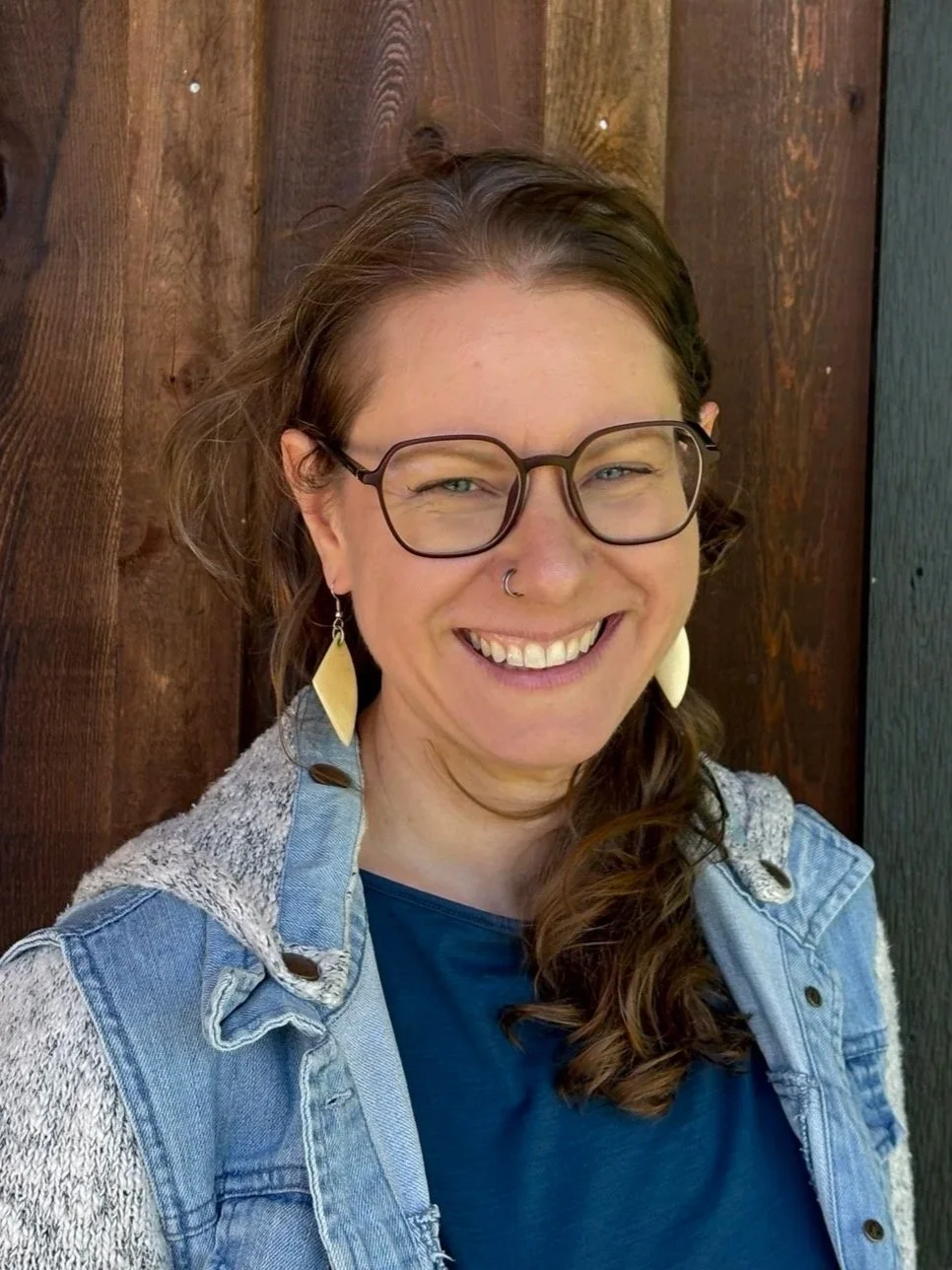
MEET Christina, M.ED,RCC
YOU SEE THE PATTERNS AND ARE READY TO CHANGE THEM.
I am a therapist based in Vancouver and working with clients across British Columbia. Through online therapy, long-form sessions, and therapy intensives on Bowen Island, I help queer, neurodivergent, dissociated, and anxious humans untangle patterns of overthinking, people-pleasing, and self-criticism.

THE WAY YOU SHOW UP IN RELATIONSHIPS TODAY DOESN’T HAVE TO BE THE WAY YOU SHOW UP TOMORROW.
Your patterns of people-pleasing, overthinking and self criticism are not flaws or personal failings. They are learned strategies that made things less hard at a time you needed them. And not only were they needed— they worked. Otherwise they wouldn’t be wired in so deeply.
But if you’re here, you’ve realized there is a cost to these patterns— disconnection, resentment, burnout, hypervigalence and feeling misunderstood, to name a few.
As we explore these patterns together and understand the role they've played in protecting you, new ways of experiencing relationships, connecting with yourself, and responding to challenges can begin to emerge.

How I work

01
TOGETHER, WE’LL DROP BELOW THE NOISE AND EXPLORE WHAT FUELS THESE PATTERNS.
Many of the patterns that keep us stuck live in subconscious parts of the brain. Because of this, I specialize in working with experiential therapies that are designed to engage and shift these deep patterns. When we take the approach of working with the patterns where they are held, and not simply talking about them, significant and lasting change is possible.
02
A FEW THINGS TO KNOW ABOUT WORKING WITH ME
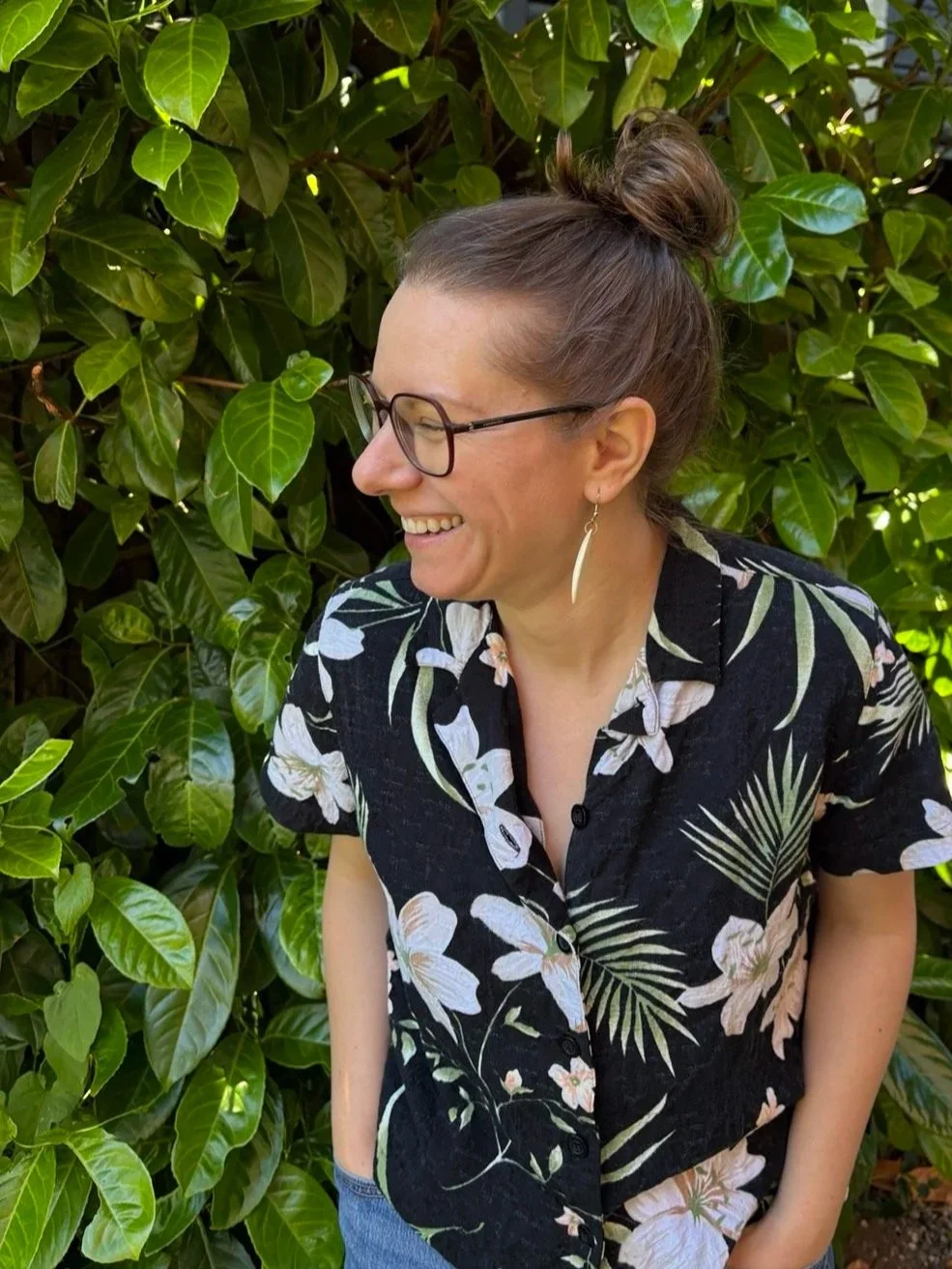
I have over 10 years experience in the mental health field, and extensive post-graduate training in trauma processing and nervous system regulation. But more important than that, as a queer, neurodivergent therapist, I endeavour to show up in my full humanity. This means I’ll be honest with you about what I know and what I don’t know. If you ask me a question, I’ll answer it, and if I make a mistake, I’ll apologize.
Showing up this way also means I see my role as both a guide and a collaborator. Some things you might hear me say include: “I’m thinking of these two options—do either of them seem interesting to you?”, “Am I getting it, or not quite yet?”, “I have a thought that might be hard to hear—do you want it?”, and “Fair enough. That makes a lot of sense to me.”
And while we’ll be working on hard stuff, and taking it seriously, laughter is welcome, too. Because hey, if a dark joke doesn’t crack a smile from your therapist, what are we doing here? Some things require laughter to make it through.
For me, this way of being in the therapy room is at the heart of queer, feminist, and anti-oppressive practice.
HOW WE CAN WORK TOGETHER
Online or phone Therapy (60-90 minutes)
Remote therapy provides a consistent and accessible starting point where we can get clear on what brings you to therapy, and the pace and format(s) that will best support your work. Many people continue exclusively with remote therapy, while others may choose in person options.
01
IN PERSON- LONG FORM THERAPY (90-120 minutes)
Long-form sessions create space to go deeper. Many clients find that a 90-minute session allows for a similar depth of progress as two standard 60-minute sessions. In two hours, the depth grows further. This is because 15-20 minutes of each session is spent sharing updates, finding the focus for the work, and grounding afterwards. Because of this, longer sessions naturally have more room for deeper exploration and processing.
For this reason, I offer in-person sessions primarily in extended formats to support deeper experiential work.
02
Individual therapy intensives ON BOWEN ISLAND
These 1-3 day intensives honour that healing requires us to slow down and listen deeply. Each intensive includes a 60-90 minute online intake session, customized workbook and 3-4 hours of therapy each day.
Intensives can be a powerful option when you're seeking focused support, wanting to move through a particular issue, or simply looking for more depth than is possible in weekly therapy. Learn more here.
03
please note:
I am not currently accepting new clients for in-person 60-minute sessions. All new clients are invited to begin with a free 20-minute online consultation, followed by an online 60 minute intake session. Together, we determine the pace and format(s) that will best supports your needs, goals, and budget. This may include ongoing online therapy, extended in-person sessions, or a therapy intensive.
Rates
To align with provincial standards, my fees are informed by the BCACC 2026 Fee Guide.
The association's recommended range for a more experienced clinician (3-5+ years post graduation) offering specialized services (see my training here) ranges from $175 to $225 per 50-minute session.
I have intentionally expanded my shortest session format to a full 60 minutes to give us additional time for deeper work.
-
$225/ 60 minute session.
-
$337.50/ 90 minute session
$450/ 120 minute session
-
You can find information about intensive rates and formats here.
My Specialties
01
02
03
04

HEre’s what I believe about therapy:
It takes time, but things do get easier
I know this because I’m living it and watching it happen for my clients. Things that never felt possible begin to unfold. Less overthinking and overwhelm, less self criticism and people pleasing, more ease in relationships. These things are all possible.
Good listening isn’t enough
I’m not a nod “mmm hmmm” kind of therapist. If you’ve tried to make changes and can’t, what you’re likely up against is old patterns in your subconscious brain and in your body. This requires delicacy and focus. We’ll figure out the pace together and I’ll guide you each step of the way.
You get to choose
Change is hard, and sometimes scary. Before we start our work we’ll get clear on what your hopes are— snapping less at your partner, feeling less overwhelmed, experiencing more ease, and so on. From there, we’ll look at what’s getting in the way and explore different ways of working with it, including the potential benefits and risks of each approach. You then decide what you want to explore, when, and how. We’ll work within the reality of your life and if you have energy for deeper work, we’ll do it. If you want a chill session, we’ll have a chill session. If you’re ready to dive deep, we’ll dive deep.
My Background
-
Certifications:
Deep Brain Reorienting (DBR level 3 for Dissociative and other Complex Trauma Disorders)
Self Trust and Integrated Resilience (STAIR Trained, level 3)
Trauma Informed Stabilization Treatment (TIST Certified level 3)
Relational Life Therapy (RLT level 1)
Trainings:
Understanding Dissociation, Jamie Marich
Shame and Self-Loathing in the Treatment of Trauma, Janina Fisher
Trauma and the Body, Janina Fisher
Memory Reconsolidation, Julianne Taylor Shore
Trauma and Memory, Julianne Taylor Shore
Internal Family Systems Circle Program, IFS Institute
Complete IFS Therapy Immersion, PESI
Internal Family Systems Therapy, PESI
Advanced Master Program on the Treatment of Trauma, NICAMB
The Neurobiology of Attachment, NICAMB
Frontiers in the Treatment of Trauma, NICAMB
-
Masters of Education in Contemplative Inquiry, Simon Fraser University
Masters level counselling courses, City University and Yorkville University
Yoga Therapy Extension Certificate, Mount Royal University
B.A. Child and Youth Care, University of Victoria
Certificate in Intercultural Education and Training, University of Victoria
-
I am a Registered Clinical Counsellor (#18457) with the British Columbia Association of Clinical Counsellors. My services are covered by many insurance carriers. Please check your policy to see if it covers “Registered Clinical Counsellors OR RCC’s.” If you have insurance coverage, I will provide you a receipt you can submit for reimbursement at the end of each session.

Ready to get started?